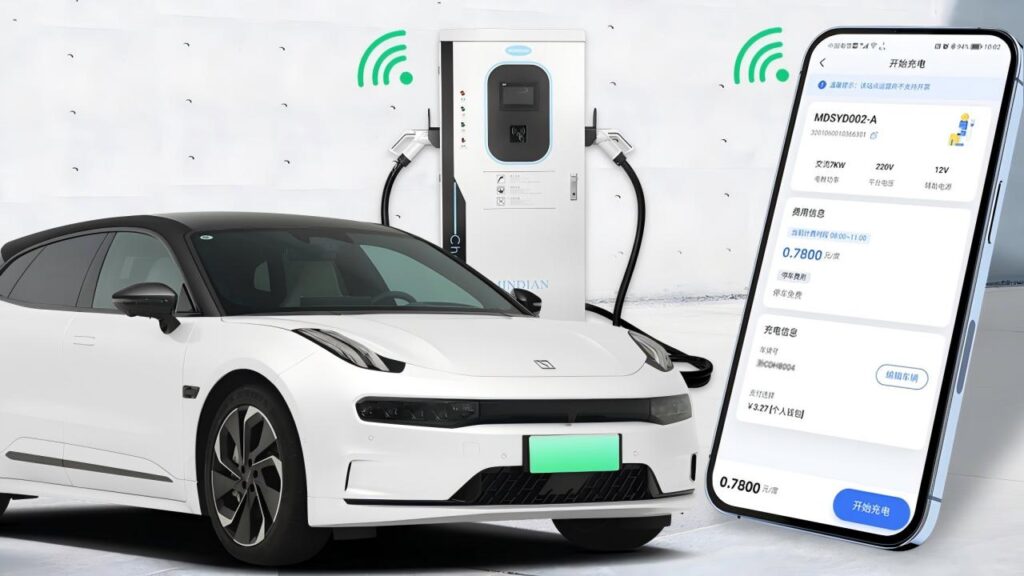
Development: Electric vehicles (also known as new energy vehicles in China) have become a mainstream technology in recent years, expanding from private cars to commercial fleets and even electric mining trucks in some areas. Countries worldwide are moving towards sustainable new energy sources. Of course, behind every electric vehicle on the road is a crucial technological support: the EV Charger.
Applications and Target Audiences: EV charging networks are expanding across highways, cities, workplaces, business centers, and residential areas. Understanding how ev chargers work is crucial. Whether you are a company deploying charging stations, a developer in the electric vehicle infrastructure market, or a user looking to understand charging speed and compatibility, the fundamental principles of electric vehicle chargers will influence your decisions, ROI, and long-term strategic deployment.
Technology: The core technologies are mainly divided into two types: AC charging and DC fast charging. AC chargers are more stable, economical, and practical, making them more suitable for home use. DC fast chargers deliver high-voltage DC power directly to the battery without a medium, achieving ultra-fast charging in minutes to tens of minutes. They differ in installation costs, charging power, hardware selection, and dependence on the power grid.
This ultimate guide will delve into the entire system chain of ev chargers—from history and working principles to global standards, engineering design, business models, and site deployment. This article aims to help you understand how electric vehicle chargers work, how to choose one, how to profit from them, and how to find faster and more reliable charging solutions.
Table of Contents
ToggleWhat Is an EV Charger? (Core Concept Explained Simply)
An electric vehicle charger is a power conversion and communication device. The numerous contact points on a typical charger aren’t all for current transmission. Simply put, it’s like a “refueling system” for electric vehicles—but unlike gasoline, which can be visually assessed for full charge, electricity is invisible and requires communication with the battery management system (BMS) to determine charging speed and component status.
A Brief History of EV Chargers: From Slow Charging to Ultra-Fast Power
The development history of EV (electric vehicle) chargers can also be seen as the development history of EVs themselves.
Electric vehicles existed as early as the 1990s, primarily relying on slow AC chargers that provided only a few kilowatts of power—requiring overnight shutdown to ensure sufficient battery charge, which was highly impractical for long-distance travel. As battery capacity increased, the demand for fast charging grew exponentially.
In the 2010s, manufacturers introduced AC Level 2 chargers, not only improving charging speed but also making installation more flexible for homes and commercial locations. DC fast chargers also brought a breakthrough. Instead of converting AC power to DC power via an onboard charger, DC fast chargers moved this process to the charger itself, reducing charging time from several hours overnight to tens of minutes.
Now, EV chargers have become more intelligent, supporting features such as OCPP remote management, PFID certification, payment integration, and even automated charging compliant with ISO 15118 standards.
How EV Chargers Communicate With the Vehicle
Modern electric vehicle chargers are no longer simple power supply devices—they are also “bridges” for communication with the battery.
When a charger is plugged into a charging socket, current doesn’t flow directly. Instead, charging begins only after the charger and vehicle exchange crucial information, such as:
- Battery State of Charge (SOC)
- Maximum permissible charging current
- Voltage and power limits
- Safety and temperature monitoring
- Charging mode and priority.
This communication ensures a safe, optimized, and battery-friendly charging process, preventing overcurrent, overheating, or voltage mismatch.
Levels of Charging: AC vs DC Explained
EV charging technology is divided into several levels, each targeting different usage scenarios:
| Charging Type | Voltage/Current | Applicable Scenarios | Typical Power | Characteristics |
|---|---|---|---|---|
|
Level 1: AC |
AC120V (North America) |
Home charging |
1.2–2 kW |
Very slow |
|
Level 2: AC |
AC230V–240V |
Residential, office buildings, shopping malls |
7 kW–22 kW |
Common |
|
Level 3: DC Fast Charging(DCFC) |
DC150V-1000V |
Major highways, expressways, transportation hubs, fleets |
60 kW, 120 kW, 180 kW and above |
Converts AC to DC inside the charger, not inside the vehicle; directly charges the battery with high voltage. |
These different charging levels directly explain why some chargers take hours while others only take minutes.
AC vs DC Charging: Key Differences Every Buyer Must Know
For those building charging stations or commercial charging projects, it is essential to understand the charging process, internal components, installation requirements, and costs of AC or DC charging.
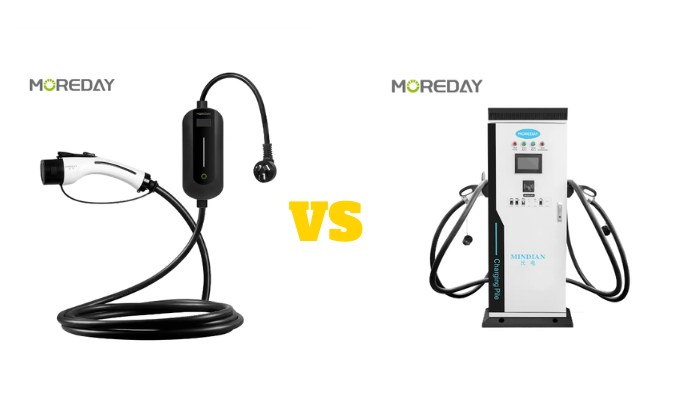
AC(Alternating current) charging is the most common charging solution for homes, residences, workplaces, and destinations.
How it works:
- AC power from the power grid is input to the electric vehicle charger.
- The electric vehicle charger primarily functions for control and protection.
- The OBC (on-board charger) converts AC power to DC power.
- The converted DC power is then delivered to the battery.
In other words, its charging speed varies depending on the capacity of the on-board charger, which may be 3.3kW, 7kW, 11kW, or 22kW.
When AC Charging Is Suitable:
- For residential use
- For office/workplace charging
- For overnight or extended stays
- For cost-sensitive projects
- For areas with limited power infrastructure
Advantages:
- Lower cost
- Easier installation
- Lighter equipment
- Not limited by basic power infrastructure
DC Fast Charging: How It Works
A DC fast charger directly converts AC power to DC power internally, and the input is in the form of DC power supplied along with the battery.
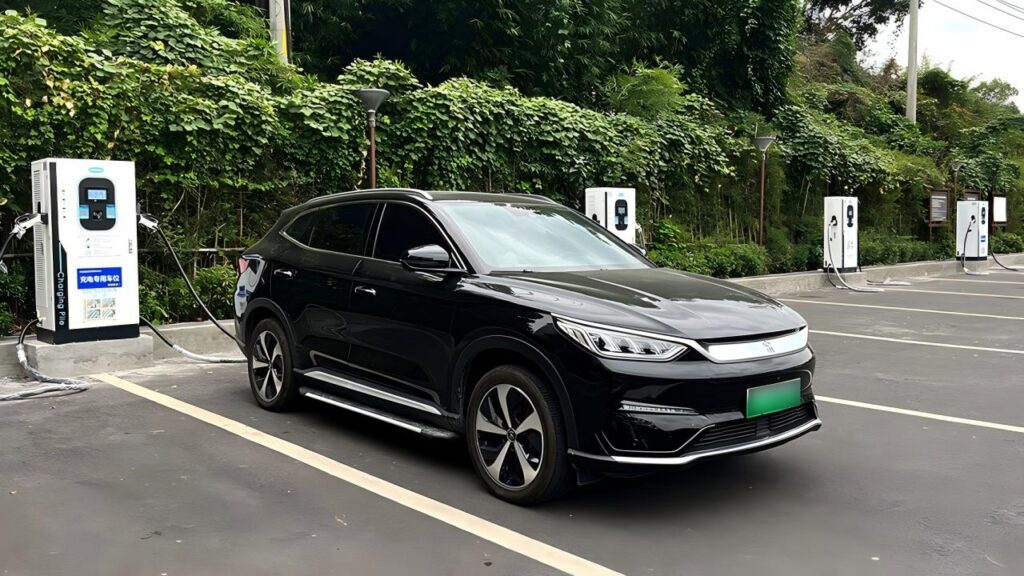
- AC(Alternating current) from the grid enters the charger.
- The charger’s internal power module (based on silicon carbide or IGBTs) converts the AC to high-voltage DC (direct current).
- The DC is delivered directly to the battery via the charging gun (CCS2 or CHAdeMO).
- Communication between the charger and the battery management system (BMS) determines the safest and fastest charging rate.
Because it bypasses the onboard charger, DC power can exceed limitations, reaching 60kW, 120kW, 180kW, 240kW, 360kW, 480kW, or even higher.
When DC Charging Is Necessary
- Highway rest areas
- Bus terminals or dispatch stations
- Commercial vehicle parking lots
- Transportation hubs
- Destination or gas stations
Advantages:
- Super-fast charging speed
- Highly compatible with online payment and OCPP platform
- Increase user turnover and revenue
Charging Speed Comparison
| Charger Type | Typical Power | Charging Time (0–80%) | Best Use Case |
|---|---|---|---|
|
AC Level 1 |
1.2–2 kW |
8–20 hours |
Home (North America) |
|
AC Level 2 |
7–22 kW |
4–8 hours |
Homes, workplaces, commercial |
|
DC Fast Charging |
60–180 kW |
15–45 minutes |
Highways, fleets, retail |
|
Ultra-Fast DC |
240–350 kW |
10–25 minutes |
Premium/high-power hubs |
Cost and Infrastructure Differences
AC Charger Costs
- Hardware: Low
- Installation: Simple (single-phase or three-phase)
- Power Requirements: Low
- Maintenance: Minimal
DC Charger Costs
- Hardware: High (power modules, cooling system, PCBA, communication unit)
- Installation: Requires transformer or power supply upgrade
- High-voltage DC cable, CCS2 interface
- Typically requires civil engineering, trenching, and cooling
- Includes software, OCPP backend, and mobile payment
In short:
- AC EV chargers are economical and suitable for locations where they can be stored for extended periods.
- DC EV chargers are suitable for locations with short charging times, high turnover rates, or commercial settings.
How DC Fast Chargers Work: A Complete Technical Breakdown
DC fast chargers are the cornerstone of the rapid development of electric vehicles. Relying solely on AC chargers and on-board chargers (OBCs) will limit voltage and charging power.
To more easily understand how DC fast chargers work, we need to break them down into three parts: power conversion, communication, and thermal management.
Power Flow: From Grid to Battery
Step 1: AC Input From the Grid
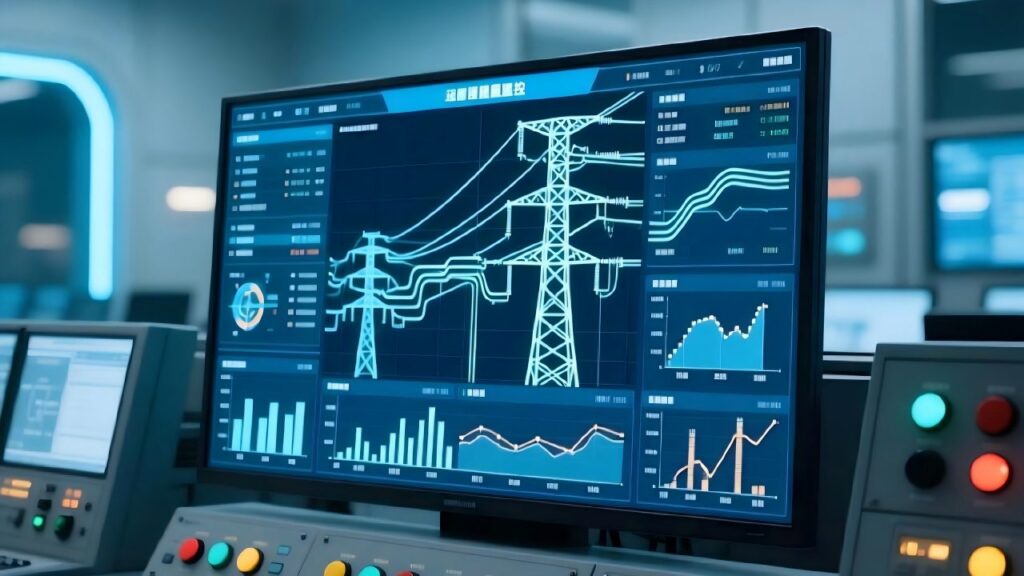
DC chargers use three-phase AC power (voltage varies from 380V to 480V depending on the region). The mains power supply is unstable and cannot directly power the battery, so we first need to adjust the power.
Step 2: Rectification – Converting AC to DC
Inside the charger, AC power passes through a rectifier module.
- Converts AC to DC
- Stabilizes current
- Eliminates high-frequency noise
- Ensures safe operation of downstream devices
Modern rectifiers use:
- IGBT Modules (Traditional, Rugged, Cost-Effective)
- SiC (Silicon Carbide) Power Modules (Higher Efficiency, Faster Switching Speed, Smaller Size)
SiC technology can be found in almost all high-power systems.
It can reduce energy loss and heat generation at the source, ensuring efficient operation even at power levels above 80kW.
Step 3: Power Factor Correction (PFC)
The process isn’t finished after the first two steps. The direct current still contains “impurities,” requiring further correction (PFC):
- Improve power quality
- Reduce harmonics
- Ensure efficient power utilization
- Comply with global standards (IEC, UL, CE)
PFC ensures compatibility between the charger and the power grid before release, avoiding unnecessary stress.
Step 4: DC Bus – The Internal Power Highway
After rectification and correction, the power supply enters the DC bus (the main line that actually transmits current), is distributed to the charging modules, and the following indicators are monitored:
- Voltage stability
- Current balance
- Safety and fault detection
- System reliability
Step 5: DC/DC Conversion – Boosting Voltage for Fast Charging
The DC bus supplies power to the DC-DC converter (also known as the power module).
It is also the most critical part of the charger.
Functions:
- Boost DC voltage
- Regulate output current
- Maintain constant charging power
- Communicate with the Battery Management System (BMS)
Different electric vehicle batteries require different charging voltages, which they communicate with the charger via the charging gun (typically 300V-950V). Therefore, a DC fast charger ensures compatibility.
Step 6: Output to the EV Battery
After converting the current, the charger directly charges the electric vehicle’s battery using the following interfaces:
- CCS2 (Most of Europe, Middle East, and Asia Pacific)
- CHAdeMO (Japan and traditional systems)
- GB/T DC (China)
This direct connection bypasses the on-board charger (OBC) to achieve ultra-fast charging.
How the Charger Communicates With the Vehicle (BMS Interaction)
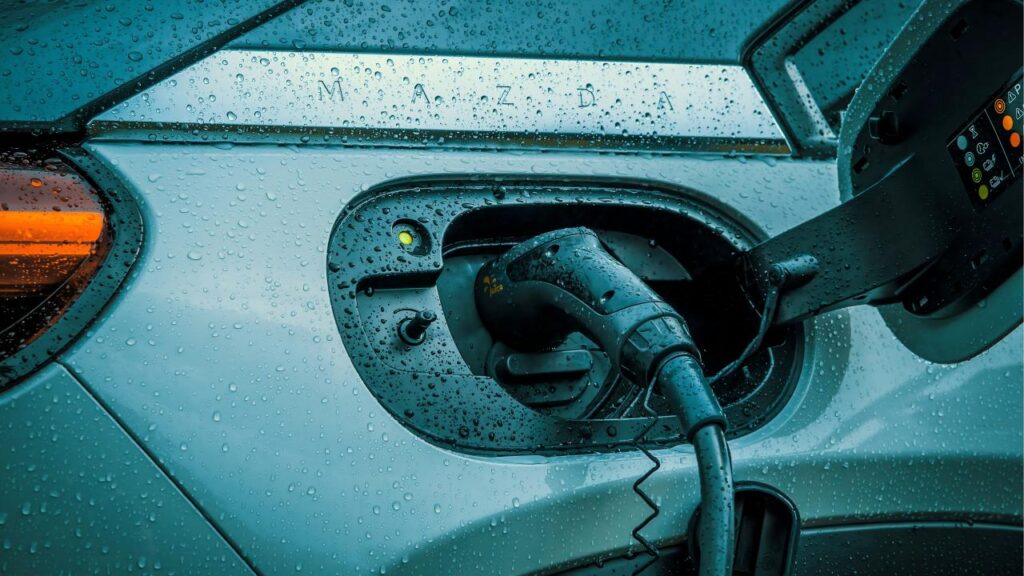
To ensure electrical safety and reduce losses during such high-current operation, the charger needs to maintain real-time communication with the battery:
- Battery Management System (BMS)
- Charger Control Unit (MCU)
- Communication Protocols (CAN, PLC, ISO15118, OCPP Backend)
Before charging begins, the charger asks the BMS many questions:
- What is the battery’s state of charge (SOC)?
- What voltage is required?
- What current can it safely accept?
- What is the battery temperature?
- Should the power be reduced or increased?
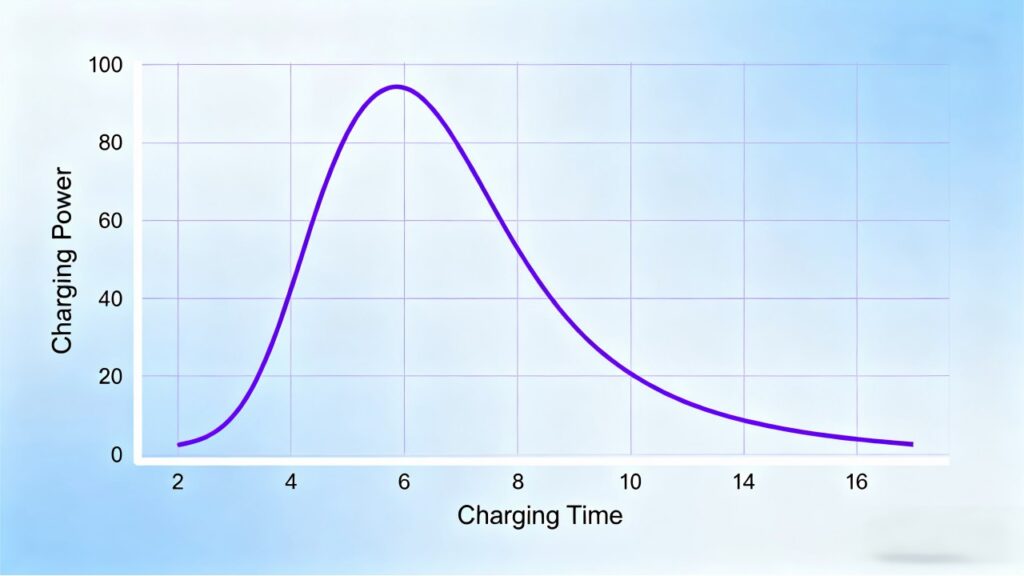
This negotiation process generates a charging curve:
- Constant current → High-power fast charging
- Constant voltage → Slow power reduction to protect the battery.
This is why, generally, a battery charges quickly from 20% to 80%, but takes slightly longer to charge from 80% to 100%.
Cooling Systems: Keeping Power Modules Safe
Temperature is extremely sensitive to batteries; both excessively high and low temperatures are detrimental. High-power DC chargers generate a significant amount of heat, making effective cooling crucial for both safety and charging efficiency. Below is a comparison chart of parameters for two common cooling methods, along with their advantages and disadvantages.
| Cooling Method | Air cooling | Liquid cooling |
|---|---|---|
|
Application Range |
240kW and below |
360kW and above |
|
Advantages |
Economical and practical, simple structure |
High thermal conductivity, longer lifespan, lower noise |
|
Disadvantages |
High failure rate, more sensitive to environmental conditions, high noise level |
High cost |
Why DC Fast Chargers Are So Much Faster
- AC to DC conversion is performed outside the electric vehicle
- Uses a high-power DC module
- Directly powers the battery (without going through the onboard charger OBS)
- Real-time communication with the Battery Management System (BMS)
- Intelligent temperature control
Its charging speed is typically 10-20 times faster than an AC charger, or even faster.
DC Fast Charger Standards and Connectors: Global Compatibility Explained
The following are the four major global standards:
| Charging Standard | CCS2 (Combined Charging System – Type 2) | CHAdeMO | GB/T DC (China) | NACS (North America Charging Standard) |
|---|---|---|---|---|
|
Main Regions |
Europe, Middle East, Australia, Southeast Asia, South America |
Japan, limited use in EU/US |
China |
USA, Canada (expanding globally) |
|
Max Power Capability |
60kW – 350kW+ |
50kW – 100kW |
Up to 250kW (current), ChaoJi 500kW+ in development |
250kW – 400kW+ (Supercharger V4 & future) |
|
Communication Protocol |
PLC (ISO 15118) |
CAN |
CAN |
PLC / CAN (depending on implementation) |
|
Vehicle Inlet Type |
Combined AC (Type 2) + DC pins |
Separate AC & DC ports |
Separate GB/T AC + GB/T DC ports |
Compact, single-port AC + DC |
|
Market Status |
Global mainstream & growing |
Declining globally; Japan legacy |
Largest installed base; transitioning to ChaoJi |
Fastest-growing; becoming US standard |
|
Typical Vehicles |
VW ID Series, BMW i Series, Hyundai/Kia EVs, Mercedes EQ, Volvo |
Nissan Leaf (older), Mitsubishi Outlander PHEV |
BYD, SAIC, NIO (older models), Geely, GAC |
Tesla, Ford, GM, Rivian, Mercedes, Hyundai, Kia (2025 onward) |
Global Compatibility Challenges You Must Consider
We need to choose the standard of the charging station according to local policies. For example, installing a CCS2 charger in China would be completely useless.
The most crucial factor in choosing a DC fast charger is power output, followed by installation conditions and long-term operational goals. Before making a decision, we need to assess the usage location, the number of charging users, and the number of vehicles that will be supported simultaneously.

Power rating is the first major factor
For retail stores and restaurants where drivers’ stops are 30-60 minutes, a 60kW charger is sufficient and doesn’t require additional infrastructure or grid connection.
For regular charging stations and commercial parking lots, a 120kW charger ensures faster charging speeds without prohibitively high costs; most electric vehicles can be charged to over 80% in half an hour.
For highway service areas, fleet operations, and logistics centers where people are constantly stopping, 180kW and higher chargers are needed. For them, time is money, and speed is paramount.
Wall-mounted chargers are more economical and space-saving, making them the preferred choice for indoor and small commercial spaces. Floor-standing chargers offer higher power and can withstand harsher outdoor environments, making them the preferred choice for public places and high-traffic areas.
Another factor is total cost. This includes energy costs, peak-hour charges, maintenance costs, network costs, and future scalability. High-power and sizable chargers can spread long-term operating costs, especially as logistics stations and fleets expand.
Market demand is the core indicator for predicting future charger usage rates; reliable charging services are not just an investment for coverage.
Selecting the Right Supplier (Buyer’s Guide)
Choosing the right supplier ensures the long-term performance, safety compliance, and reliable after-sales support of your chargers. If you’re looking to enter the electric vehicle charging market, the following points should help with your procurement.
Certifications That Truly Matter
DC fast chargers must meet standards, as they are far more destructive than AC chargers in the event of an accident. Therefore, it is essential to choose chargers with certifications, including CE certification for the European market, UL certification for the North American market, and RoHS certification to meet environmental standards. For outdoor use, IP55 or IP65 safety testing is also required. These are important hallmarks of reputable suppliers.
Factory Quality Control Capabilities
Reliable manufacturers strictly control every batch of raw materials, and modern testing systems and digital monitoring reduce the failure rate.
Warranty & After-Sales Support
A comprehensive warranty demonstrates a manufacturer’s confidence in its product. DC fast chargers typically have a warranty period of 12-36 months, with reputable suppliers offering extended warranty packages. To maximize the charger’s utilization throughout its lifespan, manufacturers provide remote diagnostics, software updates, and rapid response, all of which effectively reduce maintenance costs.
OEM/ODM Customization Options
In certain regions or usage scenarios, I might need to use my own logo, a more polished interface, a more convenient backend, or faster payment functionality. The manufacturer’s engineering team is always quick to respond.
In general, choosing a supplier requires more than just assessing hardware capabilities; it also necessitates evaluating certifications, factory capacity, after-sales service, and customization options to establish a reliable long-term partnership.
Designing a DC Fast Charging Station
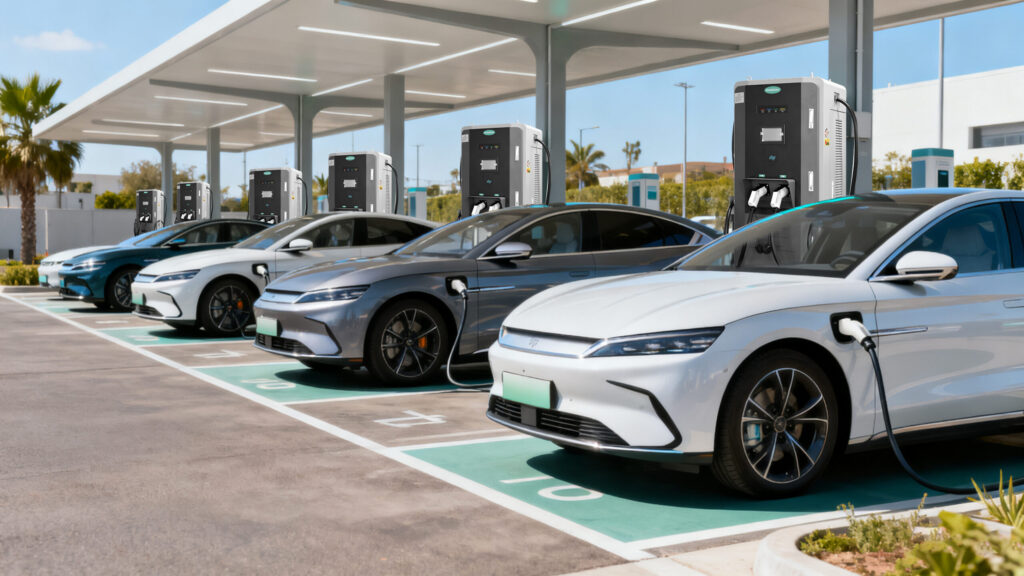
The construction of DC fast charging stations also requires consideration of technical engineering, from site layout planning and power grid and transformer considerations to cable laying and cooling, as well as subsequent factors such as safety distances and ease of maintenance. This can effectively improve operational efficiency and reduce maintenance costs, and may even enhance user loyalty.
Site Layout Planning
Ideally, the site layout should be compatible with both cabling costs and smooth vehicle access. In relatively busy commercial areas or highways, angled parking spaces can improve traffic flow and reduce waiting times. Clear signage and signage enhance convenience for customers, especially first-time users or visitors.
Grid and Transformer Considerations
DC fast chargers consume a significant amount of power, making grid capacity a primary consideration. Dedicated transformers or switchboards are needed to support 60kW, 120kW, or 180kW charging stations. Load calculations must account for peak periods and grid stability. Integrating energy storage systems with fast charging stations can reduce peak-hour electricity costs and alleviate grid load during periods of high power consumption, effectively improving return on investment.
Cable Routing and Cooling
Cable routing is also crucial. Generally, we protect high-voltage cables from weather and temperature effects using underground conduits. For high-power charging of 360kW and above, liquid-cooled charging cables are also required to ensure operating temperature.
Safety Distances and Accessibility
Safety standards require that charging stations, distribution boxes, and transformers be kept at a distance to prevent overheating and facilitate maintenance. Therefore, installation in enclosed spaces should be avoided. In many markets, accessibility features such as parking spaces compliant with the American Dependents Act (ADA) standards, wheelchair turning radii, and easily accessible charging gun heights are now mandatory. Prominent emergency stop buttons, fire extinguishers, and disconnect switches are also required.
Installation, Commissioning, and Safety Requirements for DC Fast Chargers
The installation of DC fast chargers follows a standardized procedure involving electrical design, site construction, equipment commissioning, and rigorous safety verification. This procedure ensures the long-term reliability of the charger. This section will introduce the standardized deployment, steps, and precautions for electric vehicle chargers.
Pre-Installation Site Assessment
Before construction, it is necessary to assess the power grid capacity, load calculation, grounding conditions, environmental factors, etc., which will help with the layout and necessary electrical upgrades.
Electrical Construction and Equipment Installation
After approval, professional guidance is required to ensure that the foundation concrete base or wall load-bearing, cable wiring, safety protection (miniature circuit breakers, molded case circuit breakers, surge protectors, disconnect switches), safety clearances between distribution cabinets, and sufficient connections between all equipment and components.
Commissioning and Functional Testing
Before a charging station can be opened to the public, it must undergo a full set of functional and safety tests:
- Insulation resistance test
- High voltage withstand test
- Emergency stop test
- Cooling system test
- Temperature rise test
- Full load charging test
- Stability test
Communication Protocols and Smart Networking
As mentioned earlier, communication between electric vehicle chargers is crucial, as it can effectively reduce safety risks, maintenance costs, and ensure smooth vehicle interaction.
OCPP (Open Charge Point Protocol)
OCPP is a global standard for electric vehicle chargers and cloud communication. It supports remote monitoring, billing, load balancing, firmware updates, and fault diagnosis. Currently, most DC chargers use OCPP 1.6J or OCPP 2.0.1.
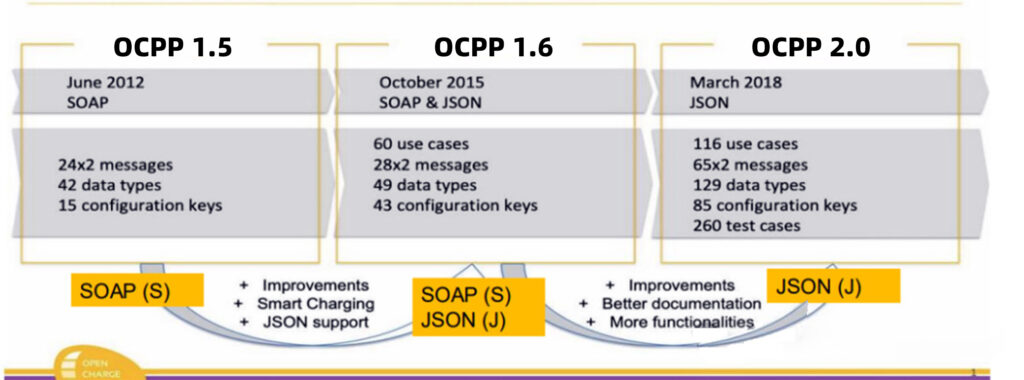
EV–Charger Communication Protocols
Chargers and vehicles conform to CCS, CHAdeMO, or GB/T standards. This ensures smooth data exchange during charging.
RFID & Payment Integration
RFID cards, mobile applications, and QR codes provide authentication and payment capabilities through encrypted communication.
Future Trends in EV Charging
There are still some differences in convenience between gasoline cars and electric cars, and electric vehicles are still developing rapidly. Here are some key trends:
Higher-Power DC Charging (480kW to 1MW+)
With the increase in battery capacity of electric vehicles, ultra-fast chargers will become as ubiquitous as gas stations are today, and charging times will be significantly reduced.
Integration with Solar + Energy Storage
More charging stations are combining fast chargers with photovoltaic systems and high-voltage energy storage systems to reduce peak electricity demand and grid pressure, and improve energy independence.

Wireless and Automated Charging
The vehicle can operate normally on designated roads while simultaneously charging its battery. Autonomous driving measurements can be used in conjunction with electric vehicle charging equipment for fully automated charging.
The development of electric vehicles still has a long way to go, but it is laying the foundation for a fully electrified transportation ecosystem.
Conclusion
Electric vehicle charging has entered a new era, faster, safer, and smarter than ever before. From home AC chargers to megawatt-class DC fast chargers, the entire industry is rapidly advancing.
From how electric vehicle chargers work to installation, safety, communication protocols, and future trends, we help businesses and users make informed decisions.
At MOREDAY, we are committed to providing safer, more efficient, and smarter charging solutions to support the global development of sustainable energy.
An EV charger is a device that powers the battery of an electric vehicle, keeping it fully charged for driving. It’s similar to how a phone charger charges a phone.
Level 2 chargers are the most common solution for electric vehicles, offering faster charging speeds compared to Level 1 chargers. They use a 240V single-phase AC power supply and typically charge a pure electric vehicle from 20% to 80% in 4-8 hours.
The cost of commercial electric vehicle charging stations depends on charging power, charging standards, and technical parameters. Generally, suppliers with mature technology and complete service capabilities will quote the following prices:
40kW: $2200-$4200
60kW: $2600-$4800
80kW: $3000-$5200
120kW: $5000-$6900
240kW: $6500-$9800
360kW: $9000-$14000
480kW: $14000+ The price will also be affected by optional features such as OCPP, WiFi, 4G, RFID, recharge, Ethernet, Bluetooth, and TUYA connectivity.
The cost of charging an electric vehicle depends on the electricity price of the charging station (generally consisting of electricity price + service fee + parking fee) multiplied by the vehicle’s battery capacity. For example, if the electricity price is €0.5/kWh and the vehicle’s 100kWh battery is 80% used, then charging 80kWh would require: €0.5 * 80 = €40.
For home chargers, simply adjust the electricity price above to your home’s electricity price and multiply by the cost.
The charging speed of electric vehicles depends on the power of the charger. Generally, a DC fast charger with a capacity of 100kWh or more can charge a pure electric vehicle from 20% to 80% in 30 minutes.
The cost of installing a charger at home consists of the charger itself plus the electrician’s installation fee. Home chargers range from $60 for a 3.5kW portable charger, $90-$180 for a 7kW wall-mounted or portable charger, $260 for an 11kW wall-mounted charger, and $300 for a 22kW wall-mounted charger. The electrician’s installation fee is also included.
A DC fast charger is a device that rectifies the three-phase power from the grid into DC, boosts the voltage, and then bypasses the on-board charger (OBC) to directly power the battery, resulting in faster and more stable charging.
Yes, installing electric vehicle charging stations will have some impact on the power grid. Depending on local policies, homeowners generally need to apply for a power supply permit from the power supply station.